This CME event will be of great interest to Interventional Radiologists, Radiology Residents, Interventional Radiology Fellows as well as Technologists and Nurses working in Interventional Radiology and any other healthcare provider with an interest in Interventional Radiology.
Needs Assessment
This program was developed based on feedback received from the evaluation forms collected during the SIR, CIRSE, and CAIR Annual Meetings.
Meeting Learning Objectives
At the end of the meeting, the participant should expect to:
Analyze the latest advancements and evidence-based practices in interventional radiology (IR), including updates in vascular, oncological, and musculoskeletal interventions.
Discuss the technical nuances, procedural strategies, and innovations in IR treatments, with a focus on optimizing patient outcomes and minimizing complications.
Evaluate the role of multidisciplinary collaboration in the management of complex cases, emphasizing the integration of IR within the broader healthcare team.
Review and apply the principles of patient safety, quality improvement, and ethical considerations in the practice of interventional radiology.
Identify strategies for addressing common challenges in IR, including difficult anatomical considerations, patient selection, and post-procedural care.
Explore the impact of technological advancements, including imaging and device innovations, on the practice and outcomes of IR procedures.
Discuss the management of specific conditions such as arteriovenous malformations (AVMs), hepatocellular carcinoma (HCC), and pulmonary embolism (PE), incorporating the latest guidelines and research findings.
Examine the importance of professional development, wellness, and resilience in maintaining a sustainable and fulfilling career in interventional radiology.
Analyze case studies and morbidity and mortality (M & M) cases to extract lessons learned and best practices for clinical decision-making and procedural execution.
Engage in interactive learning sessions, including debates, panel discussions, and case reviews, to foster critical thinking and collaborative problem-solving in IR.
Agenda
Sessions at a glance…to follow
Full Program…to follow
Social Activities
Thursday, May 21st, 2026, 6 pm – Opening Night Reception and Networking
Friday, May 22nd, 2026, 6 pm – Women in IR Cocktail and Networking
Annual General Meeting Notice
The Canadian Association for Interventional Radiology (CAIR) will hold an in-person Annual General Meeting (AGM) for its voting members in good standing on May 21st, 2026, at 2:50 p.m. at the Delta Hotels St. John’s Conference Centre, NL, during CAIR’s Annual Scientific Meeting.
Guest Speakers
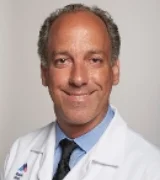
Dr. Robert Lookstein, MD, MHCDL, FSIR, FAHA, FSVM
SIR President
Interventional radiologist and
professor of radiology and surgery at the
Icahn School of Medicine at Mount Sinai, New York
Robert A Lookstein, MD FSIR FAHA, is Professor of Radiology and Surgery in the Division of Vascular and Interventional Radiology at The Mount Sinai Medical Center. After completing medical school at the State University of NY (SUNY) Health Science Center at Brooklyn in 1995, he did his residency and fellowship in Vascular and Interventional Radiology at The Mount Sinai Medical School, New York. He subsequently joined the division of Vascular and Interventional Radiology. Dr. Lookstein lectures around the world on various subjects in the field of Vascular and Interventional Radiology including peripheral arterial imaging and intervention, endovascular interventions, aortic stent-grafts, and deep vein thrombosis. He is recognized as an innovator in the field of peripheral arterial disease and noninvasive vascular imaging.
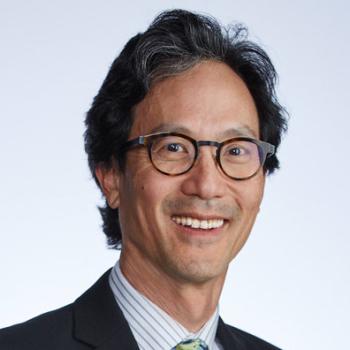
Dr. Daniel Sze, MD, PhD
Professor of Radiology (Interventional Radiology),
Practices at Stanford Health Care, Stanford Medicine Children’s Health.
Dr. Sze is a Professor of Interventional Radiology at Stanford University and the Editor-in-Chief of the Journal of Vascular and Interventional Radiology. After double-majoring in biochemistry and visual arts and design at Harvard University, he worked as an architectural graphic designer and scientific illustrator, and then went on to complete an MD and PhD in Biophysics at Stanford. He completed residency in Radiology at the University of California, San Francisco, returned to Stanford for a fellowship in Interventional Radiology, and joined the faculty the minute after his fellowship.
Dr. Sze’s clinical and research interests include image-guided treatment of cancers using oncolytic viruses, radioembolization, chemoembolization, and immunotherapy. Other interests include management of portal hypertension and cirrhosis, and treatment of aortic diseases and venous thromboembolic disease. He has run clinical trials, published extensively, and helped to train 100 fellows, nearly half of whom have pursued academic careers. He serves as a consultant to a multitude of device and pharmaceutical companies, including start-ups in his neighborhood of Silicon Valley, where everyone, including his wife, drives a Tesla. He drives a 2016 Trek bicycle.
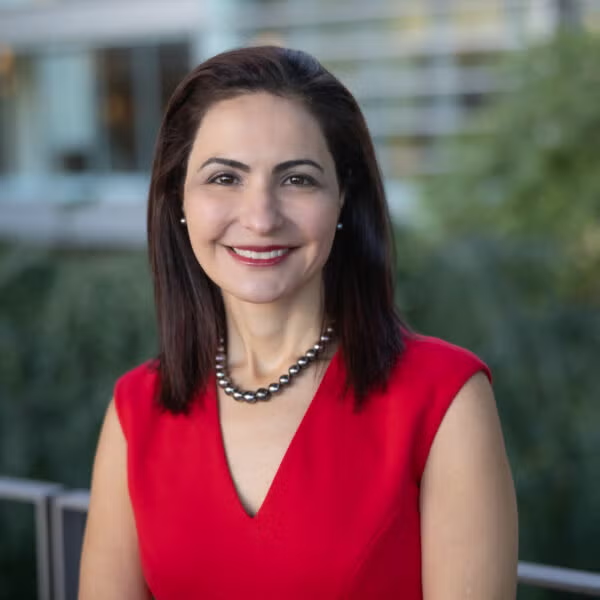
Dr. Maureen P. Kohi, MD, FSIR, FCIRSE, FAHA
Ernest H. Wood Distinguished Professor and Chair
of the Department of Radiology at the University of North Carolina at Chapel Hill
Dr. Kohi received her medical degree from New York Medical College with honors and completed her Diagnostic Radiology residency at the University of California, San Francisco (UCSF). While a resident, Dr. Kohi completed a one-year research fellowship as the recipient of the NIH/NIBIB T32 Training Grant. Following her residency, Dr. Kohi completed a Vascular and Interventional Radiology (VIR) fellowship and a second fellowship in Women’s Imaging at UCSF. She was recruited to stay on faculty at UCSF and served in multiple leadership positions, including Associate Program Director for the VIR residency and fellowship and Division Chief of Interventional Radiology.
Growing up, Dr. Kohi was fascinated by science and problem-solving. She interned at a local community hospital in San Francisco during high school and fell in love with clinical care and the magic behind medicine. She decided to pursue a career as a physician to help patients from various backgrounds and give back to her community. During medical school, she was drawn to procedural specialties. During her surgery rotation, she observed a repair of an abdominal aortic aneurysm (AAA) repair performed through the endovascular approach— the most novel approach at that time. She was amazed by the elegance of the transarterial deployment of the AAA stent graft, the patient’s quick recovery, and speedy discharge from the hospital. This experience introduced her to the innovative field of Interventional Radiology. She then learned more about Diagnostic Radiology and was fascinated by the field’s central role in patient care, and knew she wanted to be a radiologist.
CAIR Award Winner
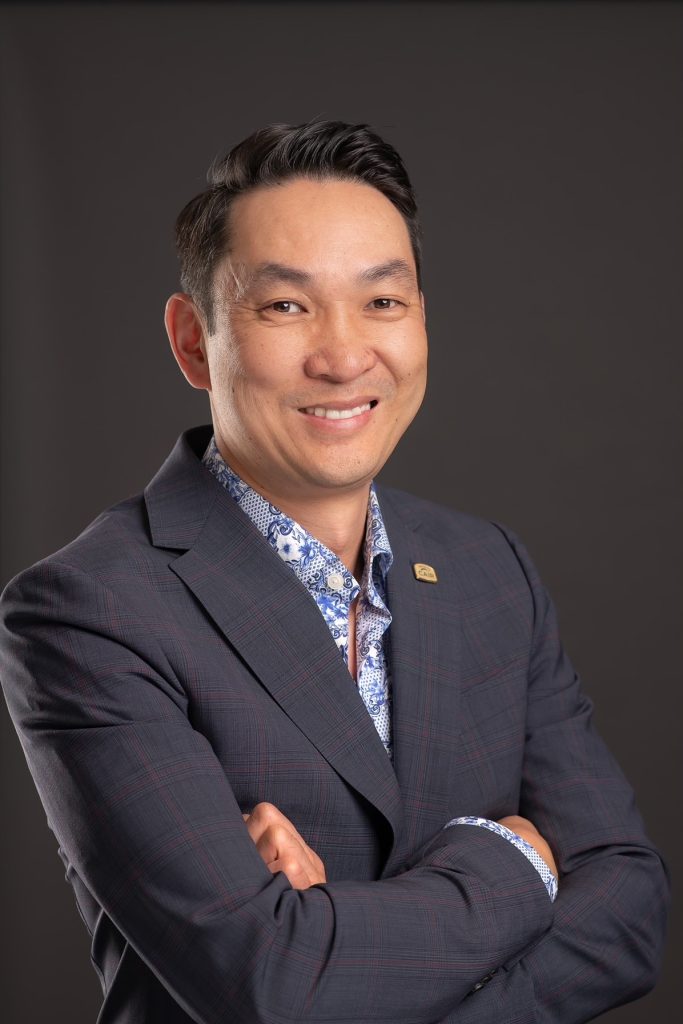
Dr.Dr. Jason Wong, MD, FRCPC, FSIR, FCIRSE
Clinical Associate Professor
Cardiovascular and Interventional Radiology
Foothills Medical Centre
Cumming School of Medicine
University of Calgary
Dr. Jason Wong is a practicing Interventional Radiologist and partner at EFW Radiology. He is based at the tertiary care Foothills Medical Centre in Calgary and is a Clinical Associate Professor at the Cumming School of Medicine at the University of Calgary. He has been on the faculty since 2005.
Dr. Wong received his medical degree from the University of Calgary and completed his Diagnostic Radiology residency there. He then went on to do his Interventional Radiology fellowship at Stanford University School of Medicine in Palo Alto, California. This was followed by a mini Cardiac CT fellowship at Stanford.
Dr. Wong is a past president for the Canadian Association of Interventional Radiology (CAIR), and has been a CAIR board member from 2011-2021.
Dr. Wong is heavily involved in teaching medical students, residents, and fellows at the University of Calgary. He was the fellowship director for the Department of Radiology of the University of Calgary from 2008-2014, and has been an active member of its Residency Program Committee since 2007. Dr. Wong is a current examiner at the Royal College of Physicians and Surgeons of Canada.
Faculty
Planning Committee
Dr. Alex Botsford
Dr. Cori Caughlin
Dr. Niamh Coffey
Dr. Peter Collingwood
Dr. Nevin De Korompay
Dr. Gerald Gahide
Dr. Jason Wong
Speakers
Dr. Mathieu Beland
Dr. Andrew Benko
Dr. Alexander Botsford
Dr. Cori Caughlin
Dr. Nevin de Korompay
Dr. Darren Ferguson
Dr. Gerald Gahide
Dr. Adnan Hadziomerovic
Dr. Gregory E.J. Harding
Dr. Rebecca Hibbert
Dr. Arash Jaberi
Dr. Jeff Jaskolka
Dr. John Kachura
Dr. Richard Owen
Dr. Stefan Przybojewski
Dr. Kong Teng Tan
Dr. David Valenti
Dr. Chris Wright
Dr. Jason Wong
Hotel Information
Delta Hotels St. John’s Conference Centre
120 New Gower Street, St.
John’s, NL, A1C 6K4
A preferential rate has been negotiated for the attendees. When you register, you will receive a private link (on your receipt) to book your room.
CAIR membership has many benefits. To join – apply here.
NOTICE OF COMMUNICATION
By registering for this event, you agree to receive communications from CAIR, including, but not limited to, overall event updates, educational content provided by sponsors, event-sponsored session details, and future events hosted by or in partnership with CAIR.
DELEGATE LIST CONSENT
A list of attendees’ names and locations will be made available to all registrants and industry representatives.
CANCELLATION FEE POLICY
30 days before the event: 50$ (+tx)
7 days before the event: 50% of registration fees (+tx)
Less than 7 days before the event: No Refund.
The Canadian Association of Interventional Radiology (CAIR) is committed to fostering unbiased, evidence-based, and high-quality education for healthcare professionals. In line with this commitment, we adhere to strict policies regarding corporate support for our accredited CPD activities. All financial and/or in-kind support from corporate entities is accepted with the clear understanding that the Scientific Planning Committee (SPC) retains full control over all aspects of the educational content, faculty selection, and program development. Any support received is duly acknowledged, ensuring transparency and accountability. By engaging in corporate support, partners and sponsors contribute to the advancement of medical education while also adhering to our stringent policies that uphold the integrity and educational value of our programs. We welcome support that aligns with our mission and values, and we are grateful for contributions that aid in the delivery of outstanding educational experiences for our members and the broader medical community.




 Professor of Radiology (Interventional Radiology),
 Ernest H. Wood Distinguished Professor and Chair
 Clinical Associate Professor